Coastal Slump and Unwise Urbanization
📸 Do you like these photos? ✨Learn to take photos like this professionally! 🎓
Photo Focus: Coastal Instability and Development Impact
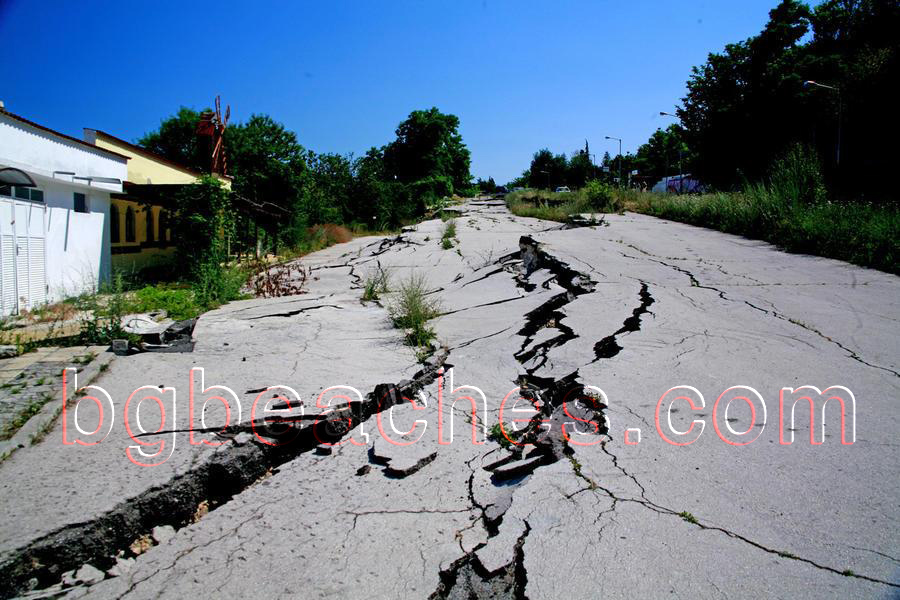
This photo highlights the serious geological issue of coastal slumps (landslides) that periodically occur at Golden Sands due to a combination of unfavorable geographical conditions and intensive development pressures. It illustrates how unwise and sometimes illegal urbanization practices can significantly exacerbate these natural erosion processes, posing substantial risks to tourism infrastructure, property values, environmental integrity, and visitor safety. Golden Sands resort sits on a geologically complex coastline where the Frangen plateau meets the Black Sea, creating steep coastal slopes that are inherently prone to mass wasting processes. The underlying geology consists of alternating layers of sandstone, clay, and marl that have different strengths and water permeability characteristics. When rainwater infiltrates the surface layers and accumulates at impermeable clay boundaries, it creates zones of weakness where overlying material can slide downslope. This natural process has been significantly accelerated by resort development that removed stabilizing vegetation, altered natural drainage patterns through paving and construction, added weight through buildings constructed on unstable slopes, and sometimes undermined slope stability through improper grading and excavation. The photograph likely captures evidence of a recent slump event where a section of slope has moved downward and outward, potentially threatening buildings, roads, or beach infrastructure. These events have occurred multiple times in Golden Sands history, with notable incidents in 1974, 2005, and several smaller events since then causing property damage and beach access disruptions. The root causes extend beyond natural processes to include regulatory failures that permitted construction in geologically unsuitable locations, inadequate enforcement of building codes and safety setbacks from cliff edges, corruption that allowed developers to circumvent environmental protections, and prioritization of short-term profit over long-term sustainability. The environmental and economic costs of coastal instability at Golden Sands include loss of beach area as slumped material covers sand, damage to expensive coastal protection structures repeatedly destroyed by slope movements, devaluation of properties in unstable zones, ongoing maintenance costs for slope stabilization efforts, and reputational damage to Bulgaria's tourism image when incidents receive international media coverage. Efforts to address these problems have included engineering interventions such as drainage systems to remove water from unstable slopes, retaining walls and buttresses to support weak areas, vegetation planting to stabilize surface soils, and beach nourishment to protect cliff toes from wave erosion. However, these technical solutions remain incomplete and require continuous maintenance and monitoring. The photograph serves as a cautionary documentation of the consequences when tourism development proceeds without adequate geological assessment and environmental safeguards, offering important lessons for sustainable coastal management that other developing destinations should heed to avoid similar problems.
Visual Context
The image provides a cautionary view, contrasting the resort's developed nature with the underlying geological instability, which is an important consideration for the long-term sustainability of the area.
About Golden Sands
Golden Sands (Zlatni Pyasatsi) is one of Bulgaria's largest and most famous resorts, located near Varna, known for its fine golden sand beach (3.5 km long) and extensive tourist infrastructure.